
How Often Commercial Buildings in Cypress, TX Really Need Repainting
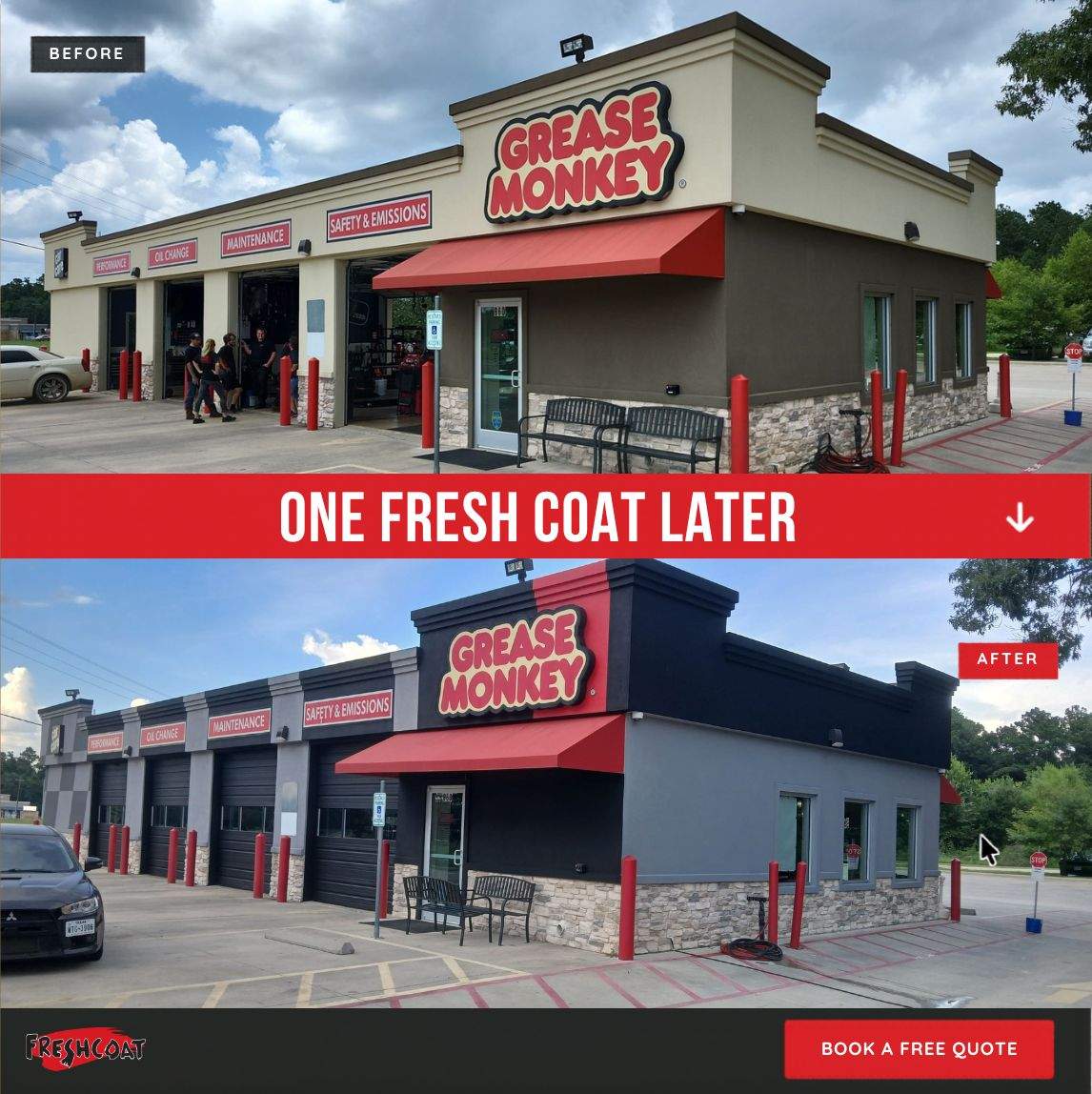
So, How Often Does a Commercial Building Need a New Coat?
Short answer: most commercial exteriors around here need repainting every 3 to 5 years. Stucco and brick can sometimes push out to 7 or 8 years if the substrate is holding up well. Interior spaces — lobbies, hallways, anywhere people walk through all day — usually need refreshing on that same 3-to-5-year cycle. That's the baseline, but your actual timeline depends on what material you've got, which way the building faces, and how much sun and rain it's taken.
I've worked on commercial properties all over this part of Houston — retail centers near Coles Crossing, office parks around Towne Lake, and the new builds going up as Bridgeland Central continues to grow. The climate out here doesn't treat every wall equally, and the calendar shouldn't be the only thing driving your decision to repaint.
What a Real Repaint Schedule Looks Like by Building and Material
General industry numbers run anywhere from 3 to 10 years for commercial exteriors, and that range is wide because building type and material matter more than any single rule. Here's how I'd break it down for what I actually see across Cypress, TX:
- Office buildings: exterior every 5–7 years, common-area interiors every 3–5 years.
- Retail storefronts: every 3–5 years on the exterior — heavy foot traffic and street visibility means wear shows up fast.
- Restaurants: interiors every 2–3 years because of grease, steam, and constant cleaning; exteriors every 3–5 years.
- Warehouses and industrial buildings: 7–10 years, though metal siding may need earlier attention if rust or chalking appears.
- Stucco exteriors (common on newer Bridgeland and Towne Lake builds): 5–10 years, depending on crack sealing and the quality of the original coating.
- Brick: 10–15 years if the mortar and existing paint film are still sound.
- Metal siding or trim: 5–10 years — metal fades and rusts faster than masonry under constant UV.
Treat these as starting points, not strict deadlines. An actual inspection of your building's condition should always carry more weight than a number on a calendar.
Why Our Climate Shortens Those Intervals
If you're in a humid, sun-soaked market like Cypress, plan toward the shorter end of every range listed above. Three local climate factors work against your paint film year-round:
Humidity. This stretch of the Gulf Coast sits at 75–80%+ average humidity most of the year, with summer afternoons climbing even higher. That moisture works its way into seams, joints, and porous surfaces like stucco and wood trim — it's the leading cause of mildew and early coating failure, and it typically shows up first on north- and east-facing walls or wherever tree cover blocks direct sun.
UV exposure. May through September, Houston's UV index routinely hits 10 or above. South- and west-facing walls absorb the worst of it, which means fading, chalking, and film breakdown usually appear there long before the north or east sides need help. If one side of your building looks sun-beaten while the other still looks sharp, that's almost always the reason.
Hurricane season. From June through November, wind-driven rain and fast-moving storms soak exterior surfaces, then intense heat bakes them right back out. That expansion-and-contraction cycle puts real stress on caulk lines, siding joints, and paint film — more than drier climates ever deal with.
None of this means there's a season you should avoid for exterior painting — work gets done successfully here in every month of the year, summer and winter included. It just means your repaint interval needs to reflect real exposure, not a national average.
Signs It's Time — No Matter What the Calendar Says
A schedule gets you in the right neighborhood. The building's actual condition is the real deciding factor. Walk the property and check for:
- Chalking — a powdery film that rubs off on your hand, meaning the paint binder is breaking down
- Cracking or peeling around window trim, doors, and seams
- Fading that's clearly worse on south- or west-facing elevations
- Dark staining or spotting from mold and mildew, especially in shaded or north-facing spots
- Rust bleeding from metal trim, gutters, or siding
- Caulk that's failed at the joints, letting moisture get behind the paint film
Catching these early is always cheaper than waiting. Once moisture gets behind the coating and into the substrate underneath, you're not just repainting anymore — you're paying for repairs too.
What Staying on Schedule Costs in Cypress, TX
Commercial exterior painting typically runs $2 to $6 per square foot, depending on building height, surface condition, and material — and those numbers shift based on access requirements, since a single-story retail strip is a completely different job than a two-story office building that needs lift equipment. At Fresh Coat Painters of Cypress, a straightforward single-story commercial exterior in the 3,000–5,000 square foot range generally lands between $8,000 and $22,000, using premium coatings and a licensed, insured crew. Interior repaints for offices and common areas typically run $1.75 to $3.25 per square foot, depending on how much furniture and equipment has to be moved.
These figures reflect our standard pricing for Cypress, TX commercial properties using premium Sherwin-Williams coatings built for this climate — not a stripped-down estimate. Sticking to a maintenance schedule instead of waiting until problems are visible almost always saves money over the building's life, since you're refreshing a healthy coating instead of fixing substrate damage. If budget timing is a concern, we also offer a 12-month same-as-cash financing option — 0% interest, no minimum payments, and you pay the same quoted price as long as it's settled within 12 months.
Setting Up a Maintenance Schedule That Actually Holds Up
The most reliable method isn't marking a date five years out and forgetting about it — it's combining a baseline interval with yearly check-ins. In practice, that looks like:
- Picking a baseline repaint interval based on your building's material (see the list above).
- Walking the exterior once a year, with extra attention on south- and west-facing walls where UV damage hits hardest.
- Inspecting high-traffic interior zones — lobbies, restrooms, hallways — twice a year, since these wear faster than private offices.
- Documenting any chalking, cracking, or staining you spot, even minor cases, so you can track how quickly it's progressing.
- Adjusting your timeline up if a rough hurricane season brings heavy wind-driven rain, since that can speed up wear beyond what you originally planned for.
Every job we take on is handled by a dedicated, background-checked crew, and every project comes with a 3-year Fresh Coat warranty — after that, Sherwin-Williams covers the coating for life, since we're a SW Platinum Certified contractor working with their premium product lines. I'm also a member of the Painting Contractors Association, and Fresh Coat Painters of Cypress is fully licensed and insured for commercial work across 77429, 77433, and the surrounding area.
Frequently Asked Questions
Most commercial exteriors need repainting every 3 to 5 years, though stucco and brick in good condition can stretch to 7 or 10 years. Interior common areas like lobbies and hallways typically need refreshing every 3 to 5 years because of higher foot traffic.
It does. With average humidity sitting at 75–80%+, moisture stays in contact with exterior surfaces much longer than in drier regions, which speeds up mildew growth and coating breakdown — particularly on north- and east-facing walls or anywhere shaded by trees.
South- and west-facing walls usually fade and chalk sooner because they take the brunt of UV exposure, which regularly hits an index of 10 or higher from May through September. North- and east-facing walls tend to hold their paint longer but are more prone to mildew from shade and trapped moisture.
Typically, yes — commercial buildings are bigger and usually need more surface prep, taller equipment like lifts or scaffolding, and scheduling around business hours. The per-square-foot rate can be comparable to residential jobs, but total costs run higher simply because of scale.
No. Stucco generally needs repainting every 5 to 10 years, brick can last 10 to 15 years with proper upkeep, and metal siding or trim often needs attention every 5 to 10 years due to faster UV fading and rust exposure.
Hurricane season, roughly June through November, brings wind-driven rain and humidity swings that stress paint film and caulk joints, so it's worth building that into your inspection routine. It doesn't rule out any particular season for painting — work gets scheduled and finished successfully in Cypress, TX all year long.
Chalking (a powdery surface residue), cracking or peeling near trim and seams, visible fading on sun-exposed walls, and dark mildew staining are the most common early signs. Rust bleed on metal fixtures is another one worth addressing before it spreads further.
Not automatically — newer stucco construction in Bridgeland and Towne Lake can hold up well if it was properly coated at build-out, while older commercial buildings near Coles Crossing may be overdue simply because more time has passed since their last paint job. Condition matters more than age.
Every job includes full surface prep, premium Sherwin-Williams coatings suited to our climate, and application by a dedicated, background-checked crew. Work comes with a 3-year Fresh Coat warranty, and Sherwin-Williams extends lifetime coverage on the coating itself thanks to our Platinum Certification.
Let's Build a Schedule Around Your Building
If your commercial property in Cypress, TX hasn't been inspected or repainted in a while, a walkthrough will tell you exactly where it stands against the ranges above. Request an estimate and inspection from Fresh Coat Painters of Cypress at https://freshcoatpainters.com/locations/cypress/.