
Stucco Painting Cost in Cypress, TX: What Repairs and Coatings Actually Run
The Numbers Homeowners Actually Need
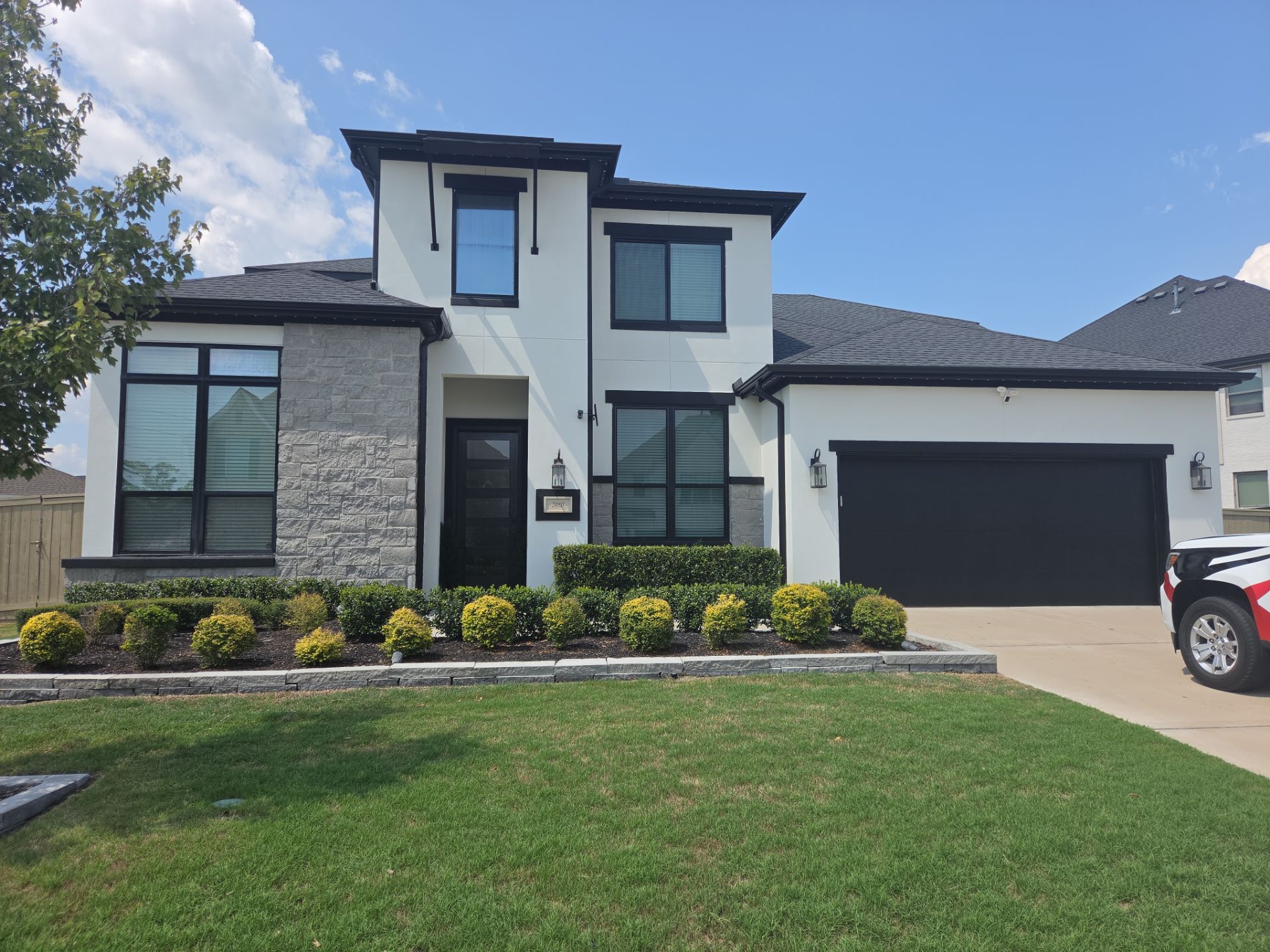
A full stucco repaint in Cypress, TX generally falls between $2.50 and $5.50 per square foot of exterior, which means most two-story homes in Bridgeland, Towne Lake, and Coles Crossing land somewhere in the $4,500 to $9,500 range when premium coatings are used. Crack repair gets priced on top of that. Simple hairline cracks usually run $300 to $900, while water damage or buckled sections can climb to $1,500–$3,500 before a drop of paint goes on.
Those figures reflect what we quote for fully licensed, insured work using premium Sherwin-Williams products and backed by a real warranty — this isn't a rock-bottom estimate meant to get undercut later. What you'll actually pay depends on three things: how much crack repair the stucco needs, how many stories you're dealing with, and whether standard acrylic or elastomeric coating makes sense for your walls. I'll break down each of those, because they move the price far more than raw square footage does.
Our Climate Is Harder on Stucco Than Most People Realize
Stucco holds up well in Texas overall, but Cypress doesn't make it easy. Humidity sits at 75-80% or higher for much of the year, and that moisture finds its way into hairline cracks and gets locked behind paint that isn't breathable enough to release it. Add in a UV index that regularly tops 10 from May through September — enough to break down pigment and binders faster than almost anywhere outside the Gulf Coast — and then stack hurricane season (June through November) on top of that, with wind-driven rain hunting out every weak seam in a stucco wall.
Combine all three and you get why most Cypress stucco needs repainting every 7 to 10 years instead of the 10-15 you'd see somewhere drier. Houses with heavy tree cover in Longwood or Stone Gate tend to sit at the shorter end of that range, since trapped humidity on north- and east-facing walls speeds up mildew growth even when the coating underneath is otherwise fine.
Crack Repair Has to Happen Before the Coating Does
Painting over a stucco crack and hoping it holds doesn't work. Houston-area soil shifts, foundation settling, and humidity swings all put pressure on stucco walls, and if you skip repair before painting, that crack telegraphs right back through the new coat within a season or two.
Most jobs we see fall into one of three buckets:
- Hairline cracks — cosmetic and surface-level, common on homes under 10 years old as stucco finishes curing. Usually $300–$900 to patch and seal.
- Pattern or spider cracking — generally linked to minor settling and needs mesh-reinforced patching rather than a quick caulk job. Typically $800–$1,800 depending on affected area.
- Water-damaged or buckling stucco — the costliest fix, and the one you can't skip, since sealing over a moisture problem just traps it underneath and speeds up failure. Can run $1,500–$3,500 or more per section.
Newer homes — and a lot of Bridgeland and Towne Lake construction falls into that 5-15 year window — tend to show hairline cracking from initial cure and settling. That's usually the easy, inexpensive fix, not a red flag.
One more thing worth flagging if your stucco is brand new: it needs about six weeks to fully cure before painting. Jump the gun, and you risk trapping moisture in the substrate, which leads to adhesion failure down the line.
Elastomeric vs. Standard Acrylic: How to Choose the Right One
This is where I see the most confusion — and honestly, the most unnecessary upselling in this business. Elastomeric coating is thicker and more flexible, and it genuinely does a better job bridging hairline cracks and standing up to wind-driven rain during hurricane season. It also costs more, often 30-50% above standard acrylic in material cost alone, and it earns its keep on homes with a track record of cracking or older stucco that's shown repeated fractures.
But it's not automatically the right move for every house. Elastomeric breathes less than acrylic, so if moisture is already trapped behind your stucco, sealing it under a heavy elastomeric film can actually make things worse. On newer stucco in Coles Crossing that's well-cured and crack-free, a good 100% acrylic coating is often the smarter, more affordable choice — it breathes properly, stands up to our UV exposure, and doesn't charge you a premium for a problem your house doesn't have.
The decision should come down to your stucco's actual condition, not a default sales pitch. Any solid estimate should include a real look at crack history and moisture levels before recommending one system over the other.
HOA and ARC Rules in Bridgeland, Towne Lake, and Coles Crossing
If you live inside one of Cypress's master-planned communities, lock in color and coating approval before scheduling anything. Bridgeland's Design Review Committee reviews exterior color and material changes as part of its architectural guidelines. Towne Lake enforces Tuscan and Mediterranean standards that govern stucco appearance and coverage. Coles Crossing has its own separate deed restrictions and review process.
None of this is unusual for Cypress — it's standard across most master-planned neighborhoods here, and it typically just means submitting your intended color and coating for sign-off before work begins. Guidelines and timelines vary by community and do get updated, so check with your specific HOA before you commit to a schedule.
Timing, Process, and What's Included in the Job
There's no bad time of year to paint stucco in Cypress, TX — exterior work happens year-round here. That said, spring and fall tend to be ideal for stucco specifically, since moderate temperatures and lower humidity give coatings more time to properly cure before afternoon heat or sudden rain shows up. Summer and winter jobs are routine too; they just mean scheduling around peak heat or rain windows.
A proper stucco repaint includes pressure washing to clear mildew and chalking, crack repair and patching, masking around trim and windows, primer on bare or patched spots, and two finish coats of either acrylic or elastomeric, depending on what your stucco actually needs.
As a Sherwin-Williams Platinum Certified contractor, Fresh Coat Painters of Cypress backs every stucco repaint with a 3-year workmanship warranty, and after that, Sherwin-Williams' own product warranty covers the coating for life. I'm also a member of the Painting Contractors Association, and we're fully licensed and insured — every job is handled by our own dedicated, background-checked crews, never day labor pulled together for the occasion.
If cost is a concern, we also offer a 12-month same-as-cash financing option — 0% interest, no minimum payments, and you pay the same quoted price as long as it's paid off within the year.
Frequently Asked Questions
Q: How much does it cost to paint a stucco house in Cypress, TX?
A: Most stucco repaints run $2.50 to $5.50 per square foot, which puts a typical two-story home between $4,500 and $9,500 depending on size, crack repair required, and whether you go with acrylic or elastomeric coating.
Q: How often should stucco be repainted in this climate?
A: Most stucco in Cypress and the greater Houston area needs repainting every 7 to 10 years, with shaded or high-humidity homes sometimes needing it closer to the 7-year mark.
Q: Is elastomeric coating worth the extra money?
A: It's worth it for stucco with a history of hairline cracking or heavy hurricane-season exposure, but it's not necessary on newer, crack-free stucco, where a quality acrylic coating performs just as well for less.
Q: Can I paint over stucco cracks without fixing them first?
A: No. Painting over an unrepaired crack almost always means it reappears through the new coat within a season or two, since paint alone can't stop ongoing structural movement.
Q: How long should new stucco cure before painting?
A: New stucco needs about six weeks to fully cure. Painting too early traps moisture in the substrate and leads to adhesion failure and early peeling.
Q: Do I need HOA approval to repaint stucco in Bridgeland or Towne Lake?
A: In most cases, yes. Bridgeland, Towne Lake, and Coles Crossing all have architectural review processes covering exterior color and coating changes, so check your HOA's current requirements before scheduling.
Q: What's the real difference between acrylic and elastomeric paint for stucco?
A: Acrylic is breathable, more affordable, and performs well on stucco without a cracking history. Elastomeric is thicker, better at bridging cracks and resisting wind-driven rain, but less breathable and pricier.
Q: What's the best time of year to paint stucco in Cypress?
A: Spring and fall offer the most consistent conditions thanks to moderate temperatures and lower humidity, but the job can be scheduled any time of year with the right planning around heat and rain.
If you're thinking about a stucco repaint anywhere in Cypress — Bridgeland, Towne Lake, Coles Crossing, or elsewhere in 77429 and 77433 — reach out to Fresh Coat Painters of Cypress for a clear, no-pressure estimate.