
Best Time of Year to Paint Your House Exterior
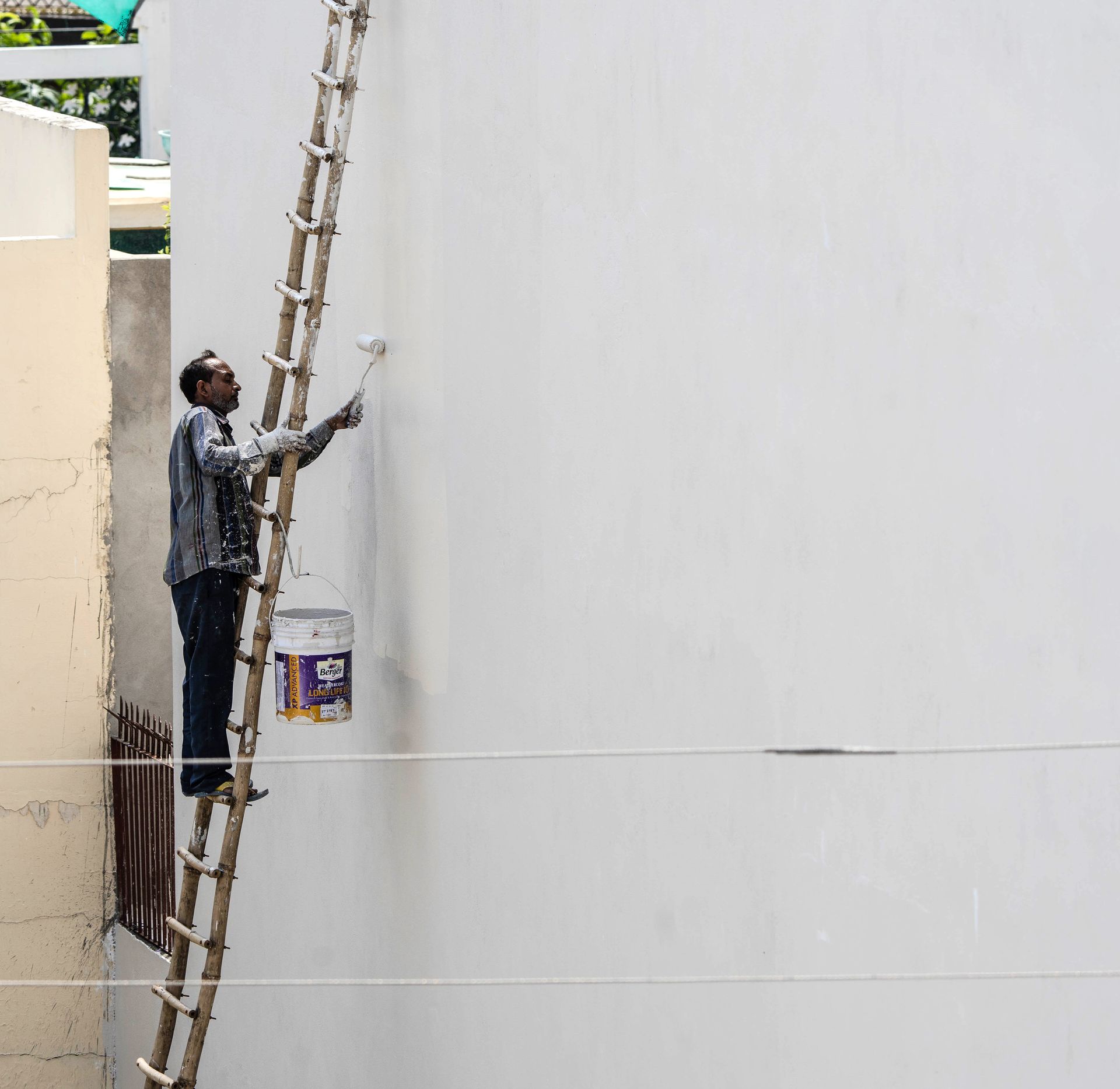
Timing an exterior paint project is not simply a scheduling preference. It is a chemistry requirement. According to Sherwin-Williams' exterior product application guidelines, latex paint applied below the manufacturer's recommended temperature does not form a proper film, leading to adhesion failures and early peeling. Their published safe application range spans 50°F to 90°F, with 70°F as the ideal. Beyond temperature, humidity, surface moisture, time of day, and forecasted weather in the days following application all determine whether a paint job cures correctly or begins failing before it has a chance to perform.
Most homeowners plan exterior paint projects around their schedule rather than around conditions. That is the primary reason exterior paint jobs fail sooner than they should. A well-timed project on a properly prepared surface will hold up for seven to ten years. A project applied outside the optimal window, even with premium paint and skilled application, starts its service life with compromised film formation that shortens its lifespan regardless of everything else that was done correctly.
Here is a season-by-season breakdown of the best time of year to paint a house exterior, the specific conditions that matter most, and how to evaluate the right window for your specific location and climate.
Why Weather Conditions Determine Paint Performance
Exterior latex paint cures through a process called coalescence. Water in the paint evaporates, and the polymer particles in the formula fuse together into a continuous, protective film. That process is highly sensitive to temperature, humidity, and the dryness of the substrate. When any of those variables fall outside the acceptable range, the film does not form correctly.
Paint applied in temperatures below 50°F cures too slowly or incompletely. The polymer particles do not coalesce properly, producing a film that is porous, chalky, and significantly more vulnerable to moisture infiltration and early peeling than a properly cured film. Paint applied in extreme heat, above 90°F on sun-exposed surfaces, flashes too quickly. The water evaporates before the polymer particles have time to flow and fuse, leaving a film that looks dry but has not formed the cohesive structure it needs for long-term adhesion.
Humidity affects the rate at which the water carrier in latex paint evaporates. At humidity levels above 70%, evaporation slows significantly, extending dry times and creating conditions where mildew can establish on the paint surface before it has fully cured. At very low humidity, paint dries too quickly and can crack or fail to level properly. The optimal humidity range for exterior painting is between 40% and 70%.
Season-by-Season Guide
Late Spring: Strong Window With Caveats
Late spring, roughly May through mid-June in most of the country, offers some of the best weather conditions for exterior painting.Temperatures are typically within the application range, day-to-night temperature swings are moderate, and rain patterns are becoming more intermittent than the heavy spring rains of March and April.
The caveat for late spring is early-season rain. Paint applied to a surface that received rain less than 24 hours prior is painting over elevated substrate moisture, which creates conditions for blistering and early adhesion failure. Late spring projects require checking not just the forecast on the day of painting but also the days leading up to it. Surfaces that look dry after a morning shower may still hold moisture in the wood grain or masonry joints that affects adhesion.
In the Lexington, Kentucky area, late spring brings moderate temperatures that typically stay within the application window, but humidity can run high in May. Monitoring humidity forecasts alongside temperature forecasts is important for this region in spring.
Early to Mid Summer: The Practical Peak Season
Early to mid summer is the most popular painting season for good reason. Temperatures are reliably within range, days are long enough to complete significant work before conditions change, rain is less frequent in most regions, and surfaces dry quickly after any moisture contact. For most of the country, June and the first half of July represent the most consistently workable conditions of the year.
The limitation of summer is heat. In regions where summer temperatures regularly exceed 90°F, painting in direct afternoon sun on south and west-facing walls creates surface temperatures that far exceed the air temperature. Dark siding absorbs enough solar heat to push surface temperatures well above air temperature, which means a 90°F air temperature day can produce a 110°F or hotter surface temperature on sun-exposed walls. Scheduling work for early morning on shaded sides of the house and following the shade around the structure as the day progresses manages this risk effectively.
While summer might be the best season to paint a house, it is also the busiest season for painting contractors, which means scheduling lead times are longer. Homeowners who want summer painting windows should plan and book several months in advance.
Early Fall: The Best Season for Many Regions
Early fall, September through mid-October in most of the eastern and central United States, is consistently the best time of year to paint house exterior surfaces for homeowners who can plan.
Temperatures have moderated from summer peaks, humidity typically drops, surfaces retain less solar heat in the lower sun angle of fall, and contractors often have more scheduling flexibility than during peak summer demand.
The specific condition that makes early fall so reliable is the stability of day-to-night temperature swings. In late summer and early fall, overnight lows rarely drop far enough below daytime highs to create the curing problems that mid and late fall produce. Paint applied on a 70°F afternoon that cools to 55°F overnight continues curing adequately. That same paint applied when daytime highs are 58°F and overnight lows are 38°F is at risk.
For painting in East Lexington specifically, early fall is an excellent painting window. The region's humidity decreases meaningfully from August to September, temperatures stay well within the application range through October in most years, and the moderate climate avoids the extreme cold-night risk that affects northern regions earlier in the fall.
Mid to Late Fall: Proceed With Caution
Mid and late fall present the most technically demanding exterior painting conditions of the year in cold and temperate climates. Sherwin-Williams specifically flags this in their FAQ, noting that a common mistake is painting when daytime temperatures rise above 50°F, but overnight temperatures drop below 35°F. Even if the application temperature at midday is technically within the acceptable range, paint that stops coalescing when temperatures drop at night does not finish forming its film correctly.
In practice, this means that the usable painting window in late fall narrows to the middle hours of the day on the warmest days, and the overnight low must be tracked as carefully as the daytime high. Any day where the forecast shows overnight lows dropping into the mid-to-upper 30s should be evaluated carefully against the specific product being used, as some premium formulas are engineered to continue curing at lower temperatures than standard products.
Winter: Limited to Specific Products and Climates
In most of the country east of the Rockies, exterior painting through December, January, and February is not practical for standard exterior latex products. Temperatures consistently fall below the application range, overnight lows freeze, and moisture from snow and ice creates substrate conditions that are incompatible with paint adhesion.
In milder climates with warmer winters, exterior painting can continue through the cold months with the right product selection. Benjamin Moore's Element Guard, for example, is formulated to perform with surface temperatures as low as 35°F and resists rain within 60 minutes of application, extending the usable season in borderline conditions. In East Lexington, where winters bring temperatures that regularly drop into the 20s and 30s, winter exterior painting is generally not the right choice for standard products, though mild stretches in January and February occasionally provide workable windows for experienced crews using appropriate formulations.
Spring: Promising but Moisture-Heavy
Early spring brings the appeal of a fresh start after winter and the motivation to tackle the exterior before summer heat arrives. The practical challenge is moisture. March and April in most of the country bring frequent rain events, and soil and building materials retain elevated moisture content from winter precipitation and snowmelt. Surfaces that appear dry after a few warm days may still hold moisture that compromises adhesion.
Spring painting is most reliably executed when there has been a sustained dry period of at least a week prior to the project, when surface temperatures are confirmed to be within the application range, and when the forecast shows no rain for at least 24 hours following application. Early spring is often better for planning and scheduling than for painting. Late spring is when the conditions typically become reliable enough to execute.
The Conditions That Matter More Than Season
Season provides a general framework, but the specific conditions on the actual painting days matter more than the calendar. A dry, mild day in late October can be a better painting day than a rainy, humid day in July. Evaluating conditions rather than simply targeting a season produces better outcomes.
Temperature
The air temperature at application time and the overnight low temperature in the 24 to 48 hours following application both matter. Application should occur when surface temperatures are between 50°F and 90°F, and overnight lows should stay above 35°F through at least the first night of curing. Checking the surface temperature directly is more reliable than relying on air temperature alone, particularly in fall and spring when solar heating can create significant differences between the two.
Humidity
Exterior painting temperature requirements and humidity requirements are equally important. Avoid painting when humidity exceeds 70% or when dew point and surface temperature are within five degrees of each other, as this creates condensation risk on the surface. High-humidity days extend dry times and can produce surfactant leaching, a condition where water-soluble components in the paint are pushed to the surface during drying, leaving streaks or spots that are mistaken for dirt but are actually part of the paint film.
Rain Window
Standard exterior latex paint needs a minimum of four hours of dry weather after application before it can withstand rain without wash-off or spotting. A conservative approach is to require a 24-hour dry window in the forecast before painting, particularly for surfaces that will receive direct rain exposure. Checking the extended forecast rather than just the current day protects the project from weather that was not anticipated when work began.
Time of Day
Early morning is typically the best time of day for exterior painting in warm weather. Temperatures are within the lower range of the application window, solar heat has not yet built up on surface-exposed walls, and the full workday is available before afternoon heat or afternoon thunderstorms arrive. Avoid painting in direct afternoon sun on sun-exposed walls in summer.
Exterior Painting Services from Fresh Coat Painters of East Lexington
At Fresh Coat Painters of East Lexington, we schedule exterior projects around conditions, not just calendars. In Kentucky's climate, early fall is consistently our most reliable window, and we plan accordingly so that every project cures correctly and holds up the way it should.
Contact us today for a free quote and find out what a properly timed, professionally executed exterior paint job looks like in your specific climate and on your specific home.