
How to Test Paint Colors Before Committing
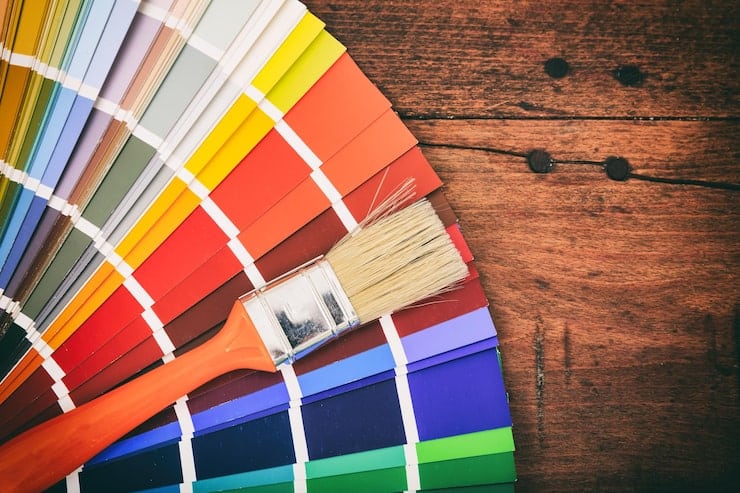
Most people pick a color from a tiny swatch, buy a gallon, and find out too late that it looks nothing like they expected. The lighting shifts it. The walls absorb it differently. What looked like a warm greige in the store turns into something that reads almost pink once it’s up.
That’s not a rare mistake. It’s an extremely common one, and it costs homeowners time, money, and a second paint job they didn’t plan for.
The good news is that learning how to test paint colors before committing is straightforward. You just need to know what actually works and what wastes your time.
Why Small Swatches Almost Always Fail
Walk into any paint store, and you’ll find walls covered in tiny color chips. They’re a useful starting point, but they’re not how you make a final decision. A two-inch swatch gives you a fraction of the information you need. It doesn’t show you how the color reacts to your specific light, how it interacts with your floors and trim, or how it shifts between morning and evening. Colors look different depending on whether natural light is coming from the north or south. Artificial lighting changes things further. In fact, studies show that lighting arrangement, brightness, and color temperature significantly change how people perceive spaciousness, relaxation, pleasantness, and even the color of a room itself. That’s why paint professionals recommend testing large samples on your actual walls and viewing them throughout the day before making a final decision.
The Right Way to Test Paint Color Samples
There are two main approaches: painting directly on the wall or using movable sample boards. Both have their place, and knowing when to use each one makes the process much more reliable.
Painting Directly on the Wall
Testing paint swatches directly on the wall gives you the most accurate read of how the color will behave. The texture is real, the paint saturates the surface the same way it will during the full job, and you’re seeing it in its actual environment.
The drawback is that it creates extra work. Once you’ve applied test colors to the wall, those areas will need to be sanded and primed before the final coat goes on; the extra layers can show through.
If you go this route, make sure you’re applying at least two full coats per sample. One coat won’t give you an accurate picture. The coverage, depth, and true hue only come through once the second coat has dried completely.
Using Movable Sample Boards
Sample boards are what most interior painters use, and for good reason. Paint a few large boards, one color per board, and you can move them around the room throughout the day without touching the walls.
Use foam board or large poster board. Apply two full coats of each color, let them dry completely, then hang them vertically against different walls. This lets you see how each color reads in various lighting conditions across the room without committing anything to the actual surface.
The keyword is vertically. Paint always looks different on a horizontal surface, and since walls are vertical, that’s the only way to evaluate your samples accurately.
Where and How to Place Your Test Samples
Location matters as much as method. Most people test in one spot and call it done. That’s not enough.
Test on Multiple Walls
Different walls in the same room receive different amounts of light throughout the day. A color that looks perfect on a well-lit south-facing wall can look dull or take on an entirely different undertone on a shadowed north-facing wall.
Testing paint colors on walls means testing on at least two walls, one that gets direct light and one that doesn’t. That way, you’re seeing the full range of how the color will actually live in the space.
Observe at Different Times of Day
Morning light, midday light, and evening artificial light all read differently on paint. A color you love at noon might look flat by 7 pm under your lamps.
Live with your samples for at least 48 hours before making a decision. Look at them when you wake up, in the middle of the day, and at night with the lights on. That’s the only way to know how the color will behave across all the conditions you actually use the room in.
Compare Against Fixed Elements in the Room
Your paint doesn’t exist in isolation. It sits next to your trim, your floors, your furniture, and your cabinetry. When you’re testing paint color samples, position them close to those elements so you can see how everything interacts.
If your flooring has warm undertones and your paint sample has cool ones, that tension will show. Better to catch it during testing than after the full job is done.
Common Mistakes When Testing Paint Colors
Only Applying One Coat
One coat of a paint sample is almost always misleading. The existing wall color bleeds through, the true saturation isn’t there yet, and the shade you’re seeing isn’t the shade you’ll get. Always apply two full coats and let them dry completely before judging.
Judging Wet Paint
Wet paint is darker than dry paint. It’s a consistent rule across nearly every color. If you’re evaluating a sample that’s still damp, you’re not seeing the real color. Wait until it’s fully cured, which typically takes a few hours, before making any calls.
Testing on a Dark Existing Wall Without Primer
If your current walls are a strong or dark color, that base will distort how your sample reads. A rich navy wall will make any color you test over it appear different from how it would look on a neutral surface. For an accurate test in this situation, apply a coat of primer to the test area first before laying down your paint color samples.
Choosing Colors Before Flooring Is in Place
If you’re renovating and the flooring isn’t installed yet, hold off on finalizing your paint color. The floor is a fixed element with its own undertones, and it will influence how the wall color reads. There are far more paint options than flooring options, so it makes more sense to match the paint to the floor than the other way around.
Paint Swatches vs Paint Samples: What’s the Difference
These two terms get used interchangeably, but they’re not the same thing, and understanding the difference matters when you’re trying to make a reliable decision.
Paint swatches are the paper or cardstock chips you pick up at the store for free. They’re useful for narrowing down your options and getting a general sense of a color family. But they’re printed representations, not actual paint. The finish, texture, and true color depth won’t come through on paper.
Paint color samples are small cans of real paint, usually available in pint or sample sizes. These are what you use to actually test colors on walls or boards. They give you a true read of how the color will look once it’s applied properly with the correct finish.
The right process is to use swatches to narrow your options down to two or three, then buy actual sample cans and test those properly. Skipping the sample can stage is where most homeowners go wrong.
How to Choose Paint Colors With Confidence
Once you’ve tested your samples properly, the decision usually becomes obvious. One color will consistently look better than the others across different lighting conditions and against your room’s fixed elements. That’s your answer.
If you’re still unsure after 48 to 72 hours, the issue is usually undertones. The colors you’re testing may be close but not quite right. Try a slightly different shade in the same family and repeat the process.
A few principles that make choosing paint colors more reliable: start with a whole-home vision rather than deciding room by room, always match paint undertones to your fixed surfaces, and treat testing as a non-negotiable step, not an optional one.
The goal isn’t to find a color that looks decent on a chip. It’s to find one that works in your actual space, under your actual lighting, with everything else in the room.
Interior House Painting Services from Fresh Coat Painters of Lafayette
At Fresh Coat Painters of Lafayette, we help homeowners get the color right before a single full gallon goes on the wall. From color consultation to clean, professional execution, our team handles the process from start to finish so you’re not left second-guessing your choices halfway through a paint job.
Get in touch today for a free quote and find out what a well-prepared, professionally finished paint job actually looks like.