
What Is the Best Paint Finish for High Traffic Areas?
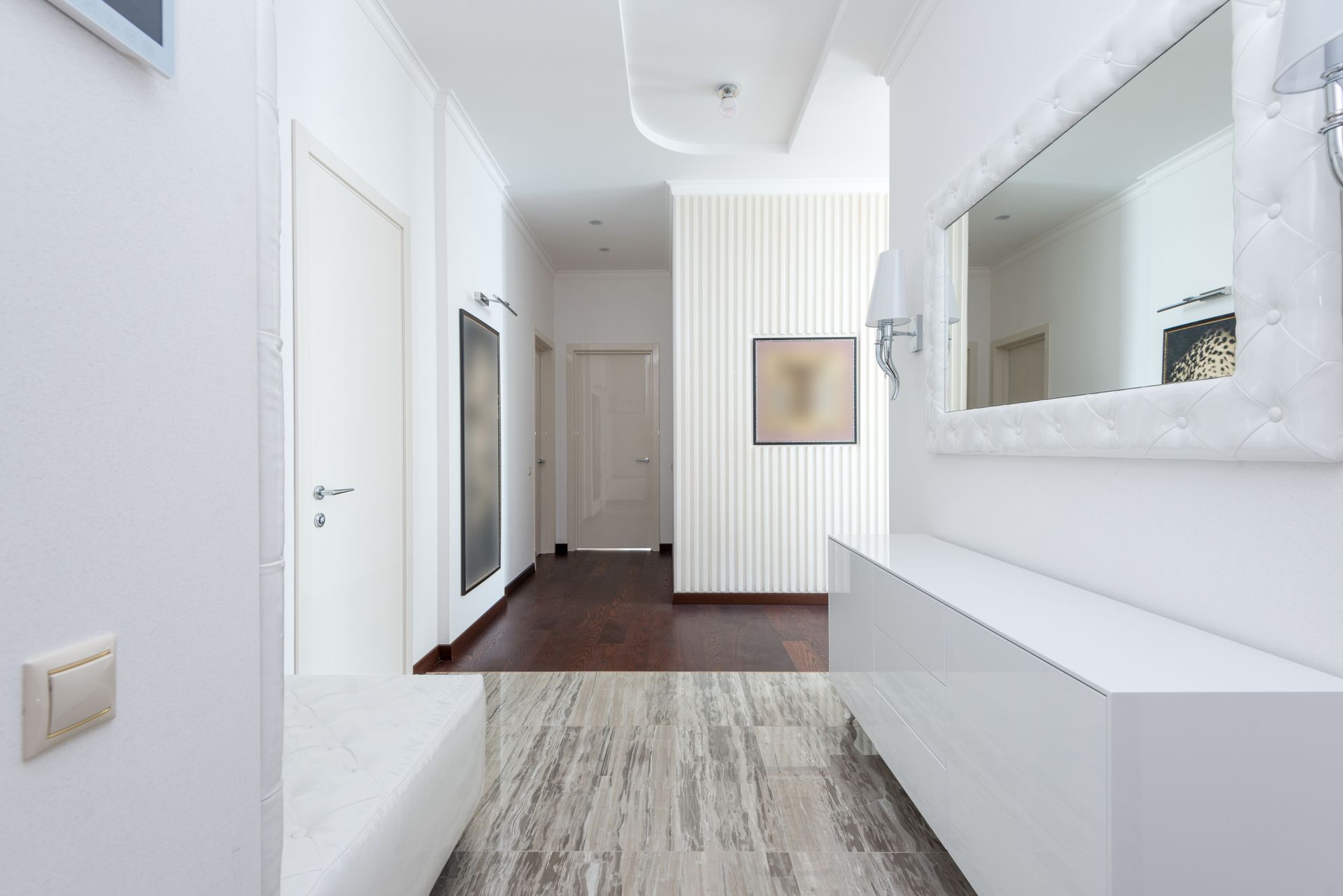
Paint finish is one of the most overlooked decisions in any interior painting project. Most homeowners spend significant time choosing a color and minimal time choosing the sheen level that goes with it. In high-traffic areas, that oversight has visible consequences. According to Sherwin-Williams' paint sheen guide, durability and washability increase directly with sheen level.
A higher sheen creates a tighter, harder film that is less porous, more resistant to moisture and stains, and significantly easier to clean without damaging the paint surface. In the areas of a home that take the most daily abuse, that difference determines how the walls look a year into the paint job.
The wrong finish in a hallway, kitchen, or entryway does not fail dramatically. It fades gradually, scuffs visibly, and resists cleaning poorly until the walls look worn, regardless of how recently they were painted. The right finish holds up to repeated contact and wipes clean without leaving marks or dulling the surface.
Here is a breakdown of every finish option, what each one is actually built for, and the answer to what is the best paint finish for high traffic areas.
How Paint Finish Affects Durability and Cleanability
Every paint finish sits on a spectrum from flat to high gloss. The position on that spectrum determines two critical performance characteristics: how much light the surface reflects and how resistant the dried film is to physical contact, moisture, and cleaning.
The mechanism behind this is straightforward. Higher sheen finishes cure into a denser, smoother film with a tighter molecular structure. That density makes the surface harder, less absorbent, and more resistant to the staining, scuffing, and smearing that high-traffic surfaces experience constantly. Lower sheen finishes cure into a softer, more porous film that absorbs contact rather than deflecting it, which is why they hide surface imperfections well but fail quickly under repeated cleaning or physical contact.
Understanding this relationship makes every finish decision logical rather than arbitrary. The question for any given area is not what looks best but what the surface needs to hold up under the conditions it will actually face.
The Paint Finish Spectrum Explained
Flat and Matte
Flat and matte finishes sit at the low end of the sheen spectrum. They reflect almost no light, which gives walls a soft, velvety appearance and effectively hides surface imperfections, including uneven drywall, patches, and texture inconsistencies. This makes them the right choice for a durable paint finish for walls, especially ceilings and low-traffic bedroom walls, where the priority is appearance over durability.
Interior painting with flat and matte finishes in any high-traffic area is the wrong choice. The soft, porous film absorbs scuffs and fingerprints rather than deflecting them, and attempts to wipe the surface clean typically result in burnishing, a dull, shiny patch where the paint film has been compressed by repeated rubbing. Flat paint that has been scrubbed looks worse than the original stain it was trying to remove.
Eggshell
Eggshell introduces a subtle sheen that is barely perceptible under most lighting conditions but meaningfully changes the performance of the dried film. The slightly higher resin content produces a surface that is more washable than flat paint and resists light contact better, making it appropriate for living rooms, dining rooms, and adult bedrooms where moderate use is expected.
For genuinely high-traffic areas, eggshell is a step in the right direction but still short of what those surfaces require. It is the right finish for areas that see regular but not constant contact, and for homeowners who want a lower sheen aesthetic and are willing to be more careful about cleaning frequency and technique.
Satin
Satin is the standard recommendation for high-traffic interior surfaces, and it earns that position by striking the most practical balance available between durability, cleanability, and appearance. Satin finishes are highly durable, can withstand heavy traffic and frequent cleaning, and are more stain-resistant than lower sheen alternatives.
The satin film cures hard enough to deflect the scuffs, fingerprints, and surface contact that hallways, kitchen cabinets, entryways, and children's rooms experience daily. It wipes clean with a damp cloth without burnishing or lifting the paint surface. And unlike semi-gloss, it does not create enough reflectivity to highlight surface imperfections on typical interior walls. For most high-traffic areas in most homes, satin is the right default.
Semi-Gloss
Many confuse this one with the satin vs semi-gloss debate. Semi-gloss delivers a noticeably
higher sheen than satin and a correspondingly harder, more moisture-resistant film. It is the correct finish for trim, doors, window frames, and cabinetry because those surfaces require maximum durability and are wiped, touched, and cleaned more aggressively than walls. Its higher reflectivity also creates the clean contrast between wall and trim that defines a well-finished interior.
On walls, semi-gloss is appropriate in very high-contact zones: the interior of a mudroom, a laundry room, or a bathroom where moisture resistance is as important as scuff resistance. The trade-off is that the higher sheen amplifies every surface imperfection, which means the walls need to be well-prepared before semi-gloss is applied. Any dent, patch, or texture inconsistency that would be invisible under satin becomes visible under the more reflective film.
High Gloss
High gloss produces a mirror-like, highly polished surface and the most durable, scrub-resistant film available. It is almost never appropriate for interior walls in residential settings because the reflectivity makes even minor surface variations dramatically visible.
High gloss is the correct choice for furniture, front doors, and architectural accent elements where durability and visual impact are both priorities and the surface being painted is smooth enough to carry the sheen without distortion.
Best Paint Finish for High-Traffic Areas
Hallways and Stairwells
Hallways and stairwells are the highest-contact surfaces in most homes. Shoulders brush the walls as people pass. Hands trail along the surfaces near the banisters. Bags and backpacks make repeated contact with the lower half of the wall. In homes with children or pets, these surfaces take constant physical abuse throughout the day.
Satin is the correct paint finish for hallways. It holds up to repeated contact and wipes clean without damage. For the lower third of the wall in particularly busy hallways, semi-gloss is a defensible choice in situations where the walls are well-prepared, and the higher durability justifies the increased reflectivity. The same logic applies to stairwell walls, particularly on the side closest to the handrail, where contact is most concentrated.
Kitchens
Kitchen walls are exposed to cooking grease, steam, splatter, and the kind of incidental food contact that accumulates invisibly until it becomes visible. The washable paint for walls in a kitchen needs to release these contaminants without requiring aggressive scrubbing that would damage a lower sheen finish.
Satin handles standard kitchen wall conditions well and is the most practical choice for the majority of kitchen wall surfaces. On the wall directly behind the stove, where grease contact and splatter are heaviest, semi-gloss provides the additional moisture resistance and cleanability that satin does not fully deliver under sustained exposure. For kitchen cabinets, semi-gloss or a cabinet-specific satin enamel is the standard.
Entryways and Mudrooms
Entryways and mudrooms are where wet coats, muddy boots, and bags with outdoor contaminants make daily contact with walls. Moisture is a consistent factor alongside the physical contact. Semi-gloss is justified in mudrooms where the moisture exposure is high, and the walls need the additional film hardness that semi-gloss provides. In entryways that are primarily contact-heavy rather than moisture-heavy, satin performs adequately and produces a more residential-looking result.
Children's Rooms and Playrooms
Children's rooms and playrooms combine crayon and marker risk, frequent hand contact at lower wall heights, and the kind of incidental impact that comes from toys, furniture being moved, and general activity. Satin is the right baseline for these rooms.
For playroom walls that will be cleaned repeatedly and forcefully over the years of use, semi-gloss on the lower half of the wall with satin above a chair rail or a mid-wall break is a practical solution that delivers maximum durability where the wall needs it most.
Bathrooms
Bathrooms require moisture resistance above standard durability. Steam, humidity, and direct water contact all stress the paint film in ways that are distinct from the physical contact challenges of hallways and kitchens.
Semi-gloss is the standard recommendation for bathroom walls because its higher resin content creates a film that resists moisture penetration more effectively than satin. In larger bathrooms with good ventilation where moisture levels are lower, satin is an acceptable choice that produces a less reflective, more residential result.
Satin vs Semi-Gloss: How to Make the Final Call
For homeowners deciding between satin and semi-gloss paint, the deciding factors are moisture exposure, surface condition, and how aggressive the cleaning will need to be.
Satin is the right call when the surface is in normal condition without significant imperfections, when moisture is not a primary concern, and when the aesthetic goal is a clean, low-profile finish that recedes rather than draws attention. It handles repeated daily contact and routine cleaning without issue and produces a result that looks intentional across a wide range of paint colors and room styles.
Semi-gloss is the right call when moisture resistance is the priority, when the surface will be cleaned aggressively and frequently, or when the surface is trim, cabinetry, or an architectural element that benefits from the harder film and visual contrast the higher sheen provides. On walls, semi-gloss requires better surface preparation because it amplifies imperfections that satin would hide.
The practical rule is: default to satin on walls in high-traffic areas and upgrade to semi-gloss on trim, in bathrooms, and in mudrooms where conditions exceed what satin is designed to manage.
Why Paint Product Quality Matters as Much as Finish
Finish level alone does not determine performance. A satin finish in a budget paint formula will not hold up as well as a satin finish in a premium product because the resin content, binder quality, and pigment load all contribute to how the dried film performs under contact and cleaning.
Premium interior paint lines from brands like Sherwin-Williams and Benjamin Moore are formulated with higher resin concentrations and more durable binders than contractor-grade alternatives. That difference is most visible in high-traffic areas where the paint is cleaned repeatedly over time. A premium satin that can be wiped down hundreds of times over several years without losing sheen or surface integrity outperforms a budget satin that begins to dull after the first dozen cleanings.
The investment in a durable paint finish for walls is most justified precisely in the areas that see the most use. The rooms that require the best product are the rooms that will test it most directly.
Interior Painting Services from Fresh Coat Painters of South Dayton
At Fresh Coat Painters of South Dayton, we match the right finish to every surface based on how the room is used, not just how it looks on a chip. In high-traffic areas, that means specifying products and sheen levels that hold up to the conditions your home actually creates, rather than products that look great on day one and show wear within a year.
Contact us today for a free quote and find out what a properly specified, professionally applied interior paint job looks like in every room of your home.