
What Is Popcorn Ceiling and Why Do People Remove It?
The U.S. Environmental Protection Agency lists textured paint and patching compounds used on walls and ceilings among the household products that may contain asbestos. That single fact explains a lot about what is popcorn ceiling and why do people remove it, because the textured ceilings found in so many older homes raise questions about safety as well as style.
Look up in many homes built between the 1950s and the 1980s, and there is a good chance you will see it: a bumpy, white, cottage-cheese texture covering the ceiling. For decades, it was one of the most common ceiling finishes in American homes. Today, it is one of the first features buyers and homeowners want gone, because it is hard to clean, difficult to repair, and looks dated.
Here is a closer look at where this finish came from, the problems it creates, the safety considerations involved, and what professional popcorn ceiling removal actually involves.
What Is Popcorn Ceiling?
Popcorn ceiling, also known as cottage cheese ceiling or acoustic ceiling texture, is a spray-applied finish made from a mix of materials that creates a rough, bumpy surface. Depending on when it was installed, the material may include paper fibers, polystyrene, vermiculite, or other aggregates suspended in a binder.
The texture was popular for several practical reasons. It was fast and inexpensive to apply, and builders could spray an entire home's ceilings in a fraction of the time it would take to tape, mud, and sand them to a smooth finish. The rough surface also hid imperfections in drywall seams, which reduced finishing work. Its textured surface was also believed to help absorb sound, which is how it earned the name acoustic ceiling.
For builders working on tight schedules and budgets, especially during the housing boom of the mid-twentieth century, popcorn ceilings were an efficient solution. That efficiency is why the texture appears in so many homes of that era.
Why Do People Remove Popcorn Ceilings?
Although the texture served a purpose when it was installed, most homeowners today see more drawbacks than benefits. The benefits of removing popcorn ceilings fall into several categories.
It Looks Dated
Design preferences have shifted toward clean, smooth surfaces that reflect light evenly. Popcorn ceilings are strongly associated with older construction, and they can make even a recently updated home feel behind the times. Removing the texture is one of the most noticeable ways to modernize a room without changing its layout.
It Collects Dust and Is Hard to Clean
The uneven surface traps dust, cobwebs, cooking residue, and smoke. Because the texture is fragile, it cannot be scrubbed or wiped without crumbling. Over time, ceilings can take on a dingy, discolored look that is nearly impossible to clean effectively.
It Is Difficult to Repair and Paint
Water stains, cracks, and damaged areas are hard to repair on a popcorn ceiling. Matching the original texture is challenging, and patches are often visible. Painting is also problematic, since rolling paint over the texture can loosen it and cause sections to fall away.
It Makes Rooms Feel Darker and Smaller
Textured ceilings scatter light and create shadows, which can make a room feel lower and darker. Smooth ceilings reflect light more evenly, helping spaces feel brighter and more open.
It Can Affect Resale Appeal
Many buyers view popcorn ceilings as a project they will need to tackle after moving in. Removing the texture before listing can help a home show better and remove a potential objection during showings.
Popcorn Ceiling Asbestos: What Homeowners Should Know
One of the most important considerations is popcorn ceiling asbestos. Some acoustic ceiling textures manufactured before the late 1970s contained asbestos, which was added for its durability and fire resistance. In 1978, the use of spray-applied asbestos-containing surfacing materials was banned under the Clean Air Act, although existing supplies could still be installed for some time afterward.
Asbestos is generally considered a hazard when the material is disturbed and fibers are released into the air. That is exactly what happens during scraping or sanding. For this reason, any home with a popcorn ceiling installed before the mid-1980s should have the material tested by a qualified laboratory before any removal, repair, or renovation work begins.
If testing confirms asbestos, the work should be handled by a licensed abatement professional in accordance with local and state regulations. If the test comes back negative, removal can proceed as a standard renovation project.
What Does Popcorn Ceiling Removal Involve?
Professional popcorn ceiling removal is a multi-step process that requires careful preparation and finishing to achieve a smooth, paint-ready surface. Because removal often reveals hidden damage, many projects also include professional drywall repair before the ceiling is primed and painted.
Protecting the Space
The room is typically cleared of furniture, and floors and walls are covered with plastic sheeting. Light fixtures and ceiling fans are removed or covered, and HVAC vents are sealed to prevent dust from spreading through the home.
Removing the Texture
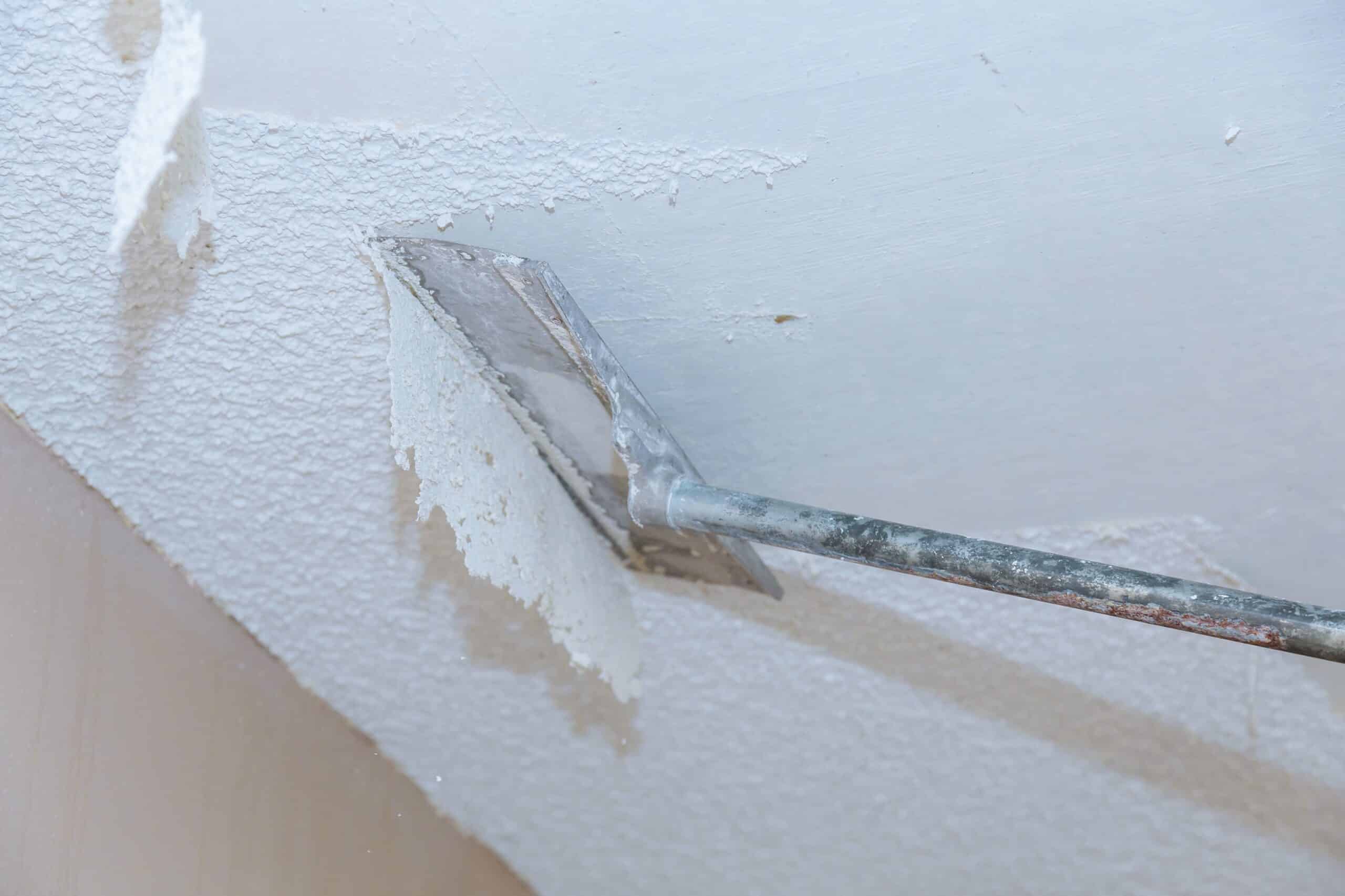
Once testing has confirmed the material is safe to disturb, the texture is lightly misted with water to soften it, then carefully scraped away. If the ceiling has been painted, the paint can prevent water from soaking in, making removal more labor-intensive.
Repairing and Smoothing the Drywall
Removing the texture often reveals imperfections that were hidden underneath, including gouges, uneven seams, and exposed tape. These areas are repaired with joint compound, and the ceiling may receive a skim coat to create a uniform surface. After drying, the ceiling is sanded smooth.
Priming and Painting
Finally, the ceiling is primed to seal the drywall and joint compound, followed by a ceiling paint that provides even coverage and a clean, finished appearance.
Is Popcorn Ceiling Removal a DIY Project?
Some homeowners consider tackling removal on their own, but the project is more demanding than it looks. Scraping overhead is physically exhausting, the process creates significant mess, and achieving a truly smooth ceiling requires drywall finishing skills. Mistakes during removal can damage the drywall, leading to additional repairs. Combined with the importance of asbestos testing, many homeowners find that professional removal saves time and produces a much better result.
For anyone asking what a popcorn ceiling is and why people remove it, the answer comes down to appearance, maintenance, safety, and value. Removing it can transform the look and feel of a home when the work is done safely and correctly.
Alternatives to Full Removal
Removal is not the only option, and in some situations it may not be the most practical one. When a ceiling tests positive for asbestos and abatement is not in the budget, encapsulation is sometimes used. This involves sealing the texture in place with a specialized coating, or covering it with new drywall panels fastened directly over the existing ceiling. Both approaches leave the original material undisturbed.
Another option is to replace the popcorn texture with a different, more modern finish. Light textures such as a knockdown or orange peel finish can be applied after the old texture is removed, which some homeowners prefer because they hide minor imperfections while still looking current. A completely smooth ceiling, often called a Level 5 finish, offers the cleanest look but requires the most precise drywall work.
Choosing between these options depends on the condition of the ceiling, test results, the rest of the home's finishes, and the homeowner's budget. A professional assessment helps clarify which approach makes the most sense for each room.
Popcorn Ceiling Removal Services from Fresh Coat Painters of SW Austin
At Fresh Coat Painters of SW Austin, we help homeowners replace dated popcorn ceilings with clean, smooth, modern finishes. Our team handles careful room protection, texture removal on tested ceilings, drywall repair, skim coating, priming, and painting, leaving your space ready to enjoy.
Contact us today for a free quote and give your ceilings a fresh, updated look.